If you are reading this blog, then you might be interested in
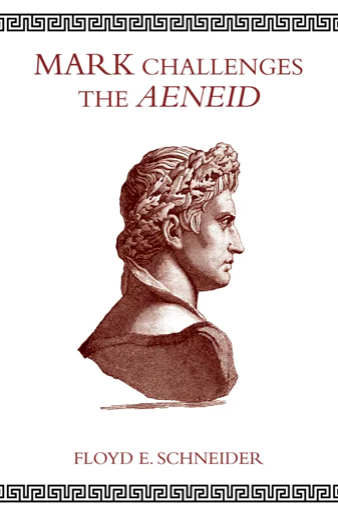
Freedom to Choose and Mark Challenges the Aeneid
BASIL OF CAESAREA’S THEOLOGY OF PNEUMATOPHOROS:
HOW IT AFFECTED HIS VIEW OF MONASTICISM
BASIL OF CAESAREA’S THEOLOGY OF PNEUMATOPHOROS: HOW IT AFFECTED HIS VIEW OF MONASTICISM
Floyd Schneider, 2013
The Greeks viewed askesis (“exercise, training”) as a core value of their society. More than physical conditioning, askesis stood for self-control, so that one could control others. Philosophers focused on the inner life of controlling a person’s thoughts, which protected one from being controlled by someone else. During the second century, Gnosticism rejected the physical body as evil, and the Syrian Encratites abstained from marriage, wine and certain foods. Virgins and widows used the concept of askesis to stay pure and avoid becoming entangled in all sexual activities, which they perceived as evil. Origen, a brilliant intellectual, led an ascetic lifestyle to the point of renunciating his wealth and living in poverty most of his life. Asceticism influenced all levels of society.
Monasticism arose in the third century. The two most common forms were eremitic and cenobitic monasticism. Anthony pioneered eremitic monasticism in Egypt. Eremos, literally “desert,” was coined to describe the lone hermit. The negative sense of eremos was isolation, wasteland, a place abandoned by God and infested with demons. The positive sense was the Old Testament Sinai setting of salvation. Both positive and negative uses affected Jesus as He was tempted by the Devil in the desert (Luke 4), and Jesus often withdrew into the desert to pray (Luke 5:16). The hermit was literally one alone and apart from any social or cenobitic community, dealing directly with God.
Pachomius, who began as a hermit, eventually pioneered cenobitic monasticism in Tabennisi, Egypt. The Greek words κοινός, "common", and βίος, "life" describe a community of monks living and working together. (Footnote 1: What started out as centers for supporting the poor and developing Christian piety and learning, eventually became power plays to control land and agricultural production, and to provide manpower for civic infighting among bishops, as the leaders of monasteries became rivals to urban bishops.)
People entered the monastic lifestyle of withdrawal (anachoresi) for a number of reasons. Fleeing persecution sent many Christians into the desert away from the pagan authorities. The first two hundred years after the Resurrection produced many martyrs, but most Christians did not want to be martyred for their faith, so many of them fled as hermits and monks in order to stay alive. On a lesser note, some simply wanted to flee state taxes and rents.
Another motivation for monasticism’s popularity came from the martyr situation. Once Constantine made Christianity the official state religion, martyrdom stopped. The phrase, “The blood of the martyrs is the seed of the church” becomes meaningless when the blood runs out. The “red” martyrs needed to be replaced by the “white” martyrs. A replacement idol needed to fill the vacuum of the super-spiritual piety of the martyrs. Whereas the martyrs suffered persecution and death, the white martyrs suffered due to their piety. For this reason many hermits and monks chose the monastic life to become the updated version of the martyrs and replace them as Christian heroes, the new spiritual elite. (Footnote 2: Eventually these martyrs came to be revered for their commitment and/or sacrifice. Those who had not been martyred collected the bodies and bones of the martyrs and honored them ultimately to the point of adoration. The cult of Relics developed into an elaborate system of prestige. Whichever church had the most famous relic was considered more blessed, and therefore, more powerful.)
The definition of true “spirituality” shifted. “If any man would come after me, let him deny himself and take up his cross and follow me” (Mark 8:34). The term “sacrifice” became “worship” from Exodus 5:3. Justification for moving to the desert to serve God surfaced from Exodus 7:16 – “The Lord, the God of the Hebrews, sent me to you, saying, ‘Let My people go, that they may serve Me in the wilderness.”’
The Roman Empire had degenerated into all-consuming materialism, gross sexual promiscuity and political corruption. Once the Christians figured out that they would be around for a while, they believed that it would be difficult to live the Christian life in the midst of the decadence. In addition to the deterioration of the pagan world, the monks had also become disillusioned with Christendom’s complacency. The Roman clergy had sacrificed morality in exchange for wealth and prosperity. After Constantine, a third generation of Christians were born who did not fully appreciate the freedom of religion they possessed and standing up for one’s faith entailed simply agreeing with the dogma of the ruling bishops. These monks wanted to draw closer to God and felt that the Christian climate hindered their spiritual lives. (Footnote 3: Sounds like the church in the Western world today.)
The results of the monastic movement were far reaching. It allowed enthusiasts to express spiritual ambition. It drew those who had been displaced by social and economic change. It created a new class of “disinterested mediators” between warring bishops.
The monastic virtues of poverty and humility led some to become hermits. When Pachomius left the hermit lifestyle and began following Anthony in Egypt, Pachomius sought to emulate and obey Anthony. Devotion to a spiritual father became the norm. This spiritual father was essentially a charismatic leader who had achieved a level of popular success. Eventually, these spiritual fathers each developed their own “Rule” of order. As an example, the Rule of Saint Benedict (Regula Benedicti) was a book of precepts written by St. Benedict of Nursia (c.480–547) for monks living communally under the authority of an abbot. (Footnote 4: During the 1500 years of its existence, it has become the leading guide in Western Christianity for monastic living in community.) This form of monasticism became characteristic of coenobitic monasteries.
The community aspect of cenobitic monasteries drastically changed the original intent and practices of monasticism. The eremitical hermits, living alone or in very small groups in the desert, wanted anonymity, a hidden life known only to God. This was a break from the traditional view of religion as an urban social existence. Anthony himself went to Alexandria during the last persecution to strengthen the faith of the martyrs, and probably to be martyred himself, but he survived and ended up alone in the desert. (Footnote 5: As monasticism spread to Europe it was modified because cold winters and wandering Teutonic tribes discouraged isolated living.) Although these hermits wanted to commune with God alone, their growing celebrity status raised the question as to the usefulness and need of the priests and the church. If the hermits could commune with God without the church and without priests in the desert, why could not believers do the same in the urban settings? Why did geography matter? Some of the hermits took up an itinerant ministry, which enhanced their status even more. Why should the people listen to the local priest if a super-spiritual hermit was available?
Basil’s theology of the Holy Spirit and his version of cenobitic monasticism bridges this chasm. One offshoot of the Arian heresy became known as Macedonianism or Pneumatomachianism. (Footnote 6: On Macedonianism and Pneumatoachianism see: Gregory of Nyssa, “On the Holy Spirit. Against Followers of Macedonians”, A Select Library of Nicene and Post-Nicene Fathers of the Christian Church. Second Series, Volume V (New York: The Christian Literature Co., 1893), pp. 315-325; F. Hauser, “Pneumatomachians”, New Catholic Encyclopedia, Vol. 11, pp. 453-454.). This heresy reduced the Holy Spirit either to a creature or to an impersonal active power of God. Numerous opponents spoke out against this false doctrine including Cyril of Jerusalem, Didymus the Blind, Hilary, Ambrose and Gregory of Nazianzus. Both Athanasius and Basil spoke out against this heresy, but in two ways. First, they defended the divinity, consubstantiality and work of the Holy Spirit on the basis of the Word of God, Tradition and Liturgy. Second, they applied this doctrine to the pastoral situations of their respective flocks.
Athanasius was the first and most prominent to make this application. He composed Vita Antonii shortly after the death of Anthony in 356. (Footnote 7: St. Athanasius, “The Life of Saint Anthony,” tr. M. e. Keenan, the Fathers of the Church, R. J. Deferrari, ed. (New York, 1952), Vol. 15, pp. 127-216; H. Quefebe, Saint Anthony of the Desert, tr. J. Whitall (New York, 1954).) In this volume St. Anthony is presented as a “man of God,” a follower of Christ, and as a humble pneumatophore, whose entire life was a spiritual pneumatophany. The word pneumatophoros emerged as an adjective in Hosea 9:7 (“spiritual” man). In his writing against Arianism, Athanasius presents his view that the Logos and the Son of the Father united to the flesh, became flesh and perfect man in order than human beings united to the Spirit might become one Spirit, i.e., Jesus him is flesh-carrying (sarkophoros) God, and we human beings the carriers of the Spirit (pneumatophoroi). (Footnote 8: Athansius, De Incarnatione et Contra Arianos: Patrologiae cursus completus; Series Graeca (Patrologia Graeca), 36:996C, in Petro B. T. Bilaniuk, “The Monk as Pneumatophor in the Writings of St. Basil the Great,” Petro B. T. Bilaniuk (Diakonia 15, no. 1, 1980), footnote, 60.)
Benedicta Ward used a paragraph to explain this word. “Some say of St. Anthony that he was ‘Spirit-borne, that is carried along by the Holy Spirit, but he would never speak of this to men. Such men see what is happening in the world, as well as knowing what is going to happen.”(Footnote 9: Benedicta Ward, transl., The Sayings of the Desert Fathers: The Alphabetical Collection (London: A. R. Mowbray; Kalamazoo, Mich.: Cistercian Publications, 1975), 6.) Kirsopp Lake translated the passage in The Shepherd of Hermas, Mandate XI, 16 as follows: “Test, then from his life and deeds, the man who says that he is inspired (ton legonta heauton pneumato phoron einai).” (Footnote 10: Kirsopp Lake, transl., The Apostolic Fathers, Vol. II (London: William Heinemann; New York: G. P. Putnam’s Sons, 1917), 123.) J. B. Lightfoot contributed: “Therefore test, by his life and his works, the man who says that he is moved by the Spirit.” (Footnote 11: J. B. Lightfoot, The Apostolic Fathers (Grand Rapids, Mich.: Baker Book House, 1970; reprint 1891), 196.) In German pneumatophorosis usually rendered as “Geisttaeger” (Spirit-Carrier). This means that the Holy Spirit revealed himself to the world through the simple and illiterate Egyptian monk (Anthony), and this special relationship to the Holy Spirit could be ascertained by 1) his struggle with and victory over his flesh and demons, and 2) his special gifts, prophecy being the most prominent.
The anachorets (secluded loner hermits) were developing a loose type of community, and Pachomius’ first monastic rule and monastery became the proto-type for Basil. Athanasius’ Vita Antonii was an attempt to reverse this trend! His writing sought a renewal of the primitive Antonite ideal of anachoretic life. Both Athanasius and Basil rejected the heresy associated with the semi-Arian view of pneumatophorosis, but Vita Antonii added fuel to the controversy called the “monastic heresy.” (Footnote 12: James Mohler, The Heresy of Monasticism (Staten Island, NY: Alba House, 1971); Herbert B. Workman, The Evolution of the Monastic Ideal (London: Epworth Press, 1927).) Many believers rejected the harsh and strict asceticism of the hermits and loose communities of anachoresi monasteries. They seemed heretical and heterodox. Nevertheless, the orthodox church and espicopate held too little spirituality for many thousands who chose to leave the paganized churches of the cities and the frantic and frenzied social life and to seek the purifying influences of the wilderness with its complete lack of civilization’s comforts. (Footnote 13: Derwas J. Chitty, The Desert City. An Introduction to the Study of Egyptian and Palestinian Monasticism under the Christian Empire (Oxford: Blackwell, 1966); S. G. A. Luff, “Transition from Solitary to Cenobitic Life (c. 250-400), Irish Ecclesiastical Record 84 (1955), 164-184.)
With this background, Basil introduced a moderate cenobitic, moderate in reference to asceticism, but radical (and more biblical) in two important ways. Basil wrote three significant pieces dealing directly with his cenobitic monastery system: the Moral Rules, the Small Asketikons (Q & A), and the Large Asketikons (Q & A). Basil opposed the eremitical solitary life of the hermit for four reasons. First, that form of monasticism did not provide any opportunity for charity. Granted, the hermit never gauged others for his services and his austere lifestyle never had much to give to others, but Basil quoted clear Scriptures commanding charity. Second, he argued that total self-sufficiency was impossible. A person alone in the desert still needed food and water, neither of which a hermit could take enough with him to last forever. The hermit might want to get closer to God, but God used other humans to provide the physical needs for the hermit. Third (probably his most important reason), Basil presented numerous examples of eremitical monks becoming excessively individualistic. Basil believed that God had created the church for the purpose of building up one another (Footnote 14: He quoted numerous Scriptures about having fellowship with other believers.) and making corporate decisions, neither of which was possible is a monk emphasized his alone-ness. Basil claimed that a “solitary” (monastikov = special term he only used to refute eremitical monasticism) lifestyle is wrong: our human nature was made to have fellowship (koinwnikon) with one another, to need one another, to love one another. He quoted Bible commands for believers to love one another, and then claimed that a solitary monk could not please God if that monk did not surround himself with others to love.
It was all well and good to reject pagan society along with the complacent Christianity that grown inside of it. It was all well and good to want to draw closer to God, but withdrawl (anaxorasis = another special term) was not allowed (like Anthony, whom Athanasius had praised). Physical flight was not enough in drawing closer to God. If a person wanted to become perfect in this life, that person would have to leave himself behind in order to forget one’s former habits. Silence did help draw closer to God. A person did need a settled mind, a state of undistraction, and it was clearly a step in the right direction if a person could lose the taste for sin. Running away from evil society, so it would stop influencing one’s entire being, seemed to make sense, but one could not run away from one’s own sin nature. Lust could exist in the desert as easily in the city. The spiritual exercises (Footnote 15: Celibacy, fasting, vigils, prayer, renunciation of property, labor, avoidance of normal comforts (bathing, sleeping on a bed, changing clothes). These spiritual desires and exercises did not change with cenobitic monasteries.) aimed at controlling, even extinguishing, the passions and re-making the inner self in order to draw closer to God, but if a person focused on the Scriptures in drawing closer to God, that person was immediately reminded that God wants His believers to “love one another, have fellowship with one another, take care of the poor, bear one another’s burdens, build up one another,” and a host of other activities only possible within a community.
And fourth, Jesus told the disciples in John 14 that the pagan world would know that believers are disciples of Jesus by the believer’s love for one another. Escaping the city and living alone in the desert was rejecting one of the Lord’s main evangelistic tools for reaching pagans with the Gospel. A hermit who lived alone in the desert had no other believers to love and no pagans to see it.
Basil established his cenobitic communities on the edge of the cities in order to overcome the weaknesses of the eremitical deficiencies. He probably considered most “Christians” to be nominal, and therefore he classed them as “wrongdoers.” He required that those in his monasteries be involved in good deeds to everyone, including hospices, taking care of the poor and underprivileged and fighting abortion! He practiced and promoted meditation, because he believed that what a person put in one’s mind affected his whole being (like becoming numb to violence from too many violent movies). He used lots of Scripture to support his views: 1 Cor. 12:12; Rom. 12:6; Acts 2:44; Eccl. 4:10; Matt. 25:18-25; Ps. 132; parable of the sheep and the goats; John 13:5. He taught that believers need one another in order to keep one another accountable. He believed that Scripture alone was not enough to correct one’s faults.
Basil’s cenobitic monasticism of community and good deeds received their theological grounding from his view of the Holy Spirit. Theological anthropology, the image of the human being, was now seen as the image of God and the carrier of the Holy Spirit. This position of the believer and the process of the Holy Spirit was viewed through the lens of ascetical and mystical perfection. This balanced the concept of spirituality of the Church which was slit between the internal aspect of life in Christ and in the Holy Spirit, and the external aspect of doing good deeds for the purposes of building up believers and showing the love of Christ to the world. Basil’s balance between these two aspects allowed the Church to adapt the Hellenistic culture in a positive way by neither condemning it nor rejecting it, but reforming it and using its positive properties. (Footnote 16: Emmanuel Amand de Mendieta, “The Official Attitude in St. Basil of Caesarea as a Christian Bishop toward Greek Philosophy and Science,” The Orthodox Churches and the West. Papers Read at the Fourteenth Summer Meeting and the Fifteenth Winter Meeting of the Ecclesiastical History Society. Derek Baker, ed. (Oxford: Blackwell, 1976), 25-49.)
Further, Basil connected the monastic spirituality to pneumatology. In monasticism the Holy Spirit was intensely experienced as a living reality, experiences which determined and guided the liturgy of prayer, meditation, fasting, chastity, penance and silence. Because Basil preserved the unity of monastic and lay spirituality, there was no articulated doctrine of a higher rank for monks. In contrast to the episcopate, Basil set in motion the ideal of the common life in which every believer could connect with the Holy Spirit and draw close to God, while obeying and pleasing God through good deeds.
The monk is portrayed as a pneumatophore, an active carrier and distributor (!) of the Holy Spirit and His gifts. (Footnote 17: Nowhere does Basil use the term pneumatophoros, but simply describes the meaning of the word.) This doctrine contained three elements which were imbedded in the three tenses of salvation. First, in the past, the monk became a predecessor of future protagonists of pneumatophores. Second, he was viewed as a living reality of the Holy Spirit’s presence in the present. Third, he was seen as an eschatological sign of the future fulfilled reality. (Footnote 18: Petro B. T. Bilaniuk, ”The Monk as Pneumatophor in the Writings of St. Basil the Great, Diakonia 15, no. 1 (1980): 49-63.) The Lord Jesus is the pneumatophor par excellence, because he is the center of all history. He gave the Spirit from the Father to the Apostles and to the Church on the day of Pentecost. Basil bases his view of the Holy Spirit ontology and activities on Christocentric theology while depending on Scripture. Some have given Basil the title of “Doctor of the Holy Spirit.”
His summary of the Holy Spirit is found in his De Spiritu Sancto, IX, 22-23. (Footnote 19: Basil the Great, De Spiritu Sancto, IX, 22-23: Patrologiae cursus completus; Series Graeca (Patrologia Graeca) 32:109.) Basil describes the unity of the Holy Spirit with the soul. This unity has allowed the soul to separate itself from the passions and lusts that push God away. His view appears close to the Alexandrian (Anthony was in Egypt) idea of spirituality that begins with purification, progressing through illumination and ends in perfection. First, the Holy Spirit purges the soul and restores the natural beauty and image of God in the human, which enables a person to draw close to the Holy Spirit. Basil believed that the lusts and passions had to first be withdrawn before human connection was possible.
Now the Spirit is not brought into intimate association with the soul by local approximation. How indeed could there be a corporeal approach to the incorporeal approach to the incorporeal? This association results from the withdrawal of the passions which, coming afterwards gradually on the soul from its friendship to the flesh, have alienated it from its close relationship with God. Only then after a man is purified from the shame whose stain he took through his wickedness, and has come back to his natural beauty and as it were cleaning the Royal Image and restoring its ancient form, only thus is it possible for his to draw near to the Paraclete. (Footnote 20: De Spiritu Sancto 9, 23: Patrologiae cursus completus; Series Graeca (Patrologia Graeca) 32:109 in Petro B. T. Bilaniuk, “The Monk as Pneumatophor in the Writings of St. Basil the Great,” (Diakonia 15, no. 1, 1980): 52-53.)
Further, human illumination is attained by the activity of the Holy Spirit. Basil is thinking of the monastic community which consists of pneumatophors, not just individual believers. These monks are spiritualized and indwelled by the Holy Spirit, and they pass along His gifts to others:
And He, like the sun, will by the aid of thy purified eye show thee in Himself the image of the invisible, and in the blessed spectacle of the image, thou shalt behold the unspeakable beauty of the archetype. Through His aid hearts are lifted up, the weak are held by the hand, and they who are advancing are brought to perfection. Shining upon those that are cleansed from every spot, He makes them spiritual by fellowship with Himself. Just as when a sunbeam falls on bright and transparent bodies, they themselves become brilliant too, and she forth a fresh brightness from themselves so souls wherein the Spirit dwells, illuminated by the Spirit, themselves become spiritual, and send forth their grace to others. (Footnote 21: Ibid.)
The social aspect of the Holy Spirit’s gifts, grounded in Basil’s cenobitic monastic ideal, informed the doctrines of the transfiguration, glorification and the eschatological fulfillment in union with God in perfection:
Hence comes foreknowledge of the future, understanding of mysteries, apprehension of what is hidden, distribution of good gifts, the heavenly citizenship, a place in the chorus of angels, joy without end, abiding in God, the being made like God, and highest of all, the being made God. (Footnote 22: Ibid.)
Basil defends the deity of the Holy Spirit on the basis of the Holy Spirit’s sanctifying power in angels and in human beings. He writes: “What reason is there for robbing of His share of glory Him who is everywhere associated with the Godhead; in the confession of the Faith, in the baptism of redemption, in the working of miracles, in the indwelling of the saints, in the graces bestowed on obedience?” (Footnote 23: De Spiritu Sancto 24, 55: Patrologiae cursus completus; Series Graeca (Patrologia Graeca) 32:172A in Petro B. T. Bilaniuk, “The Monk as Pneumatophor in the Writings of St. Basil the Great,” (Diakonia 15, no. 1, 1980): 53.) Here Basil demanded obedience in opposition to the anti-social anachoret monks, who were misusing their freedoms and neglecting the real needs of the Church. The discipline of the cenobitic monk focused on withholding his freedoms in order to avoid remain aloof from society, and to subject himself to the legitimate monastic authority, and to the sharing of the gifts of the Holy Spirit.
Basil still believed that God as divine reality was inaccessible and ineffability (indescribable), and therefore required worshipful silence, especially when he read the works of incompetent theologians. He advised them to keep silent in God’s presense. Basil truly believed that the soul of a believer could grasp the Holy Spirit if He was listened to in silence (which was also a gift of the Holy Spirit).
In his Longer Rules, Basil promoted the Holy Spirit as the source and motive for living ascetically and withdrawing from worldly lusts and passions. A believer needed to obey even minor commandments in order to not grieve the Holy Spirit:
The third service is that of love. What son seeking to please his father, and satisfying him in greater things, will choose to grieve him in small matters? He will be all the mover careful as he remembers the Apostle’s words: “Grieve not the Holy Spirit of God, in whom ye were sealed.” (Eph. 4:30). (Footnote 24: W. K. Lowther Clarke, tr., St. Basil: Ascetical Works (London: SPCK, 1925), 148.) In Rule Five of the Longer Rules Basil references the Gospel of John’s pneumatological theology and emphasized the required detachment from this life in order to receive the Holy Spirit:
And in opposition to this, He / Jesus / testified that it was impossible for the world to receive the knowledge of God, or the Holy Spirit. “O righteous Father,” he says, “the world knew thee not.” (Jo 17;25). And “the Spirit of truth, whom the world cannot receive” (Jo 14:17). He who then would truly follow God must be loosed from the chains of this life. (Footnote 25: Clarke, 159.)
In his Shorter Rules Basil states:
How is a man counted worthy to receive the Holy Spirit? Our Lord Jesus Christ taught us when he said, “If ye love me, keep my commandments. And I will pray the father and he will give you another Comforter, that he may abide with you, even the Spirit of Truth, whom the world cannot receive.” (Jo 14:17). So long then as we do not keep all the commandments of the Lord, and are not such as to be testified of by Him that “Ye are not of this world,” let us not expect to be counted worthy of the Holy Spirit. (Footnote 26: Clarke, 309.)
Because Peter gave his first sermon in Acts 2:15 at the “third hour of the day,” Basil used this verse in his monastic legislation: Again at the third hour we must rise to prayer and collect the brotherhood, should they happen to be scattered to their various occupations and, remembering the gift of the Spirit given to the Apostles at the third hour, we must worship all together that we too may become worthy to receive sanctification, at the same time asking that He may guide us and teach us what is expedient, after the fashion of him that said “Create in me a clean heart, O God, and renew a right spirit within me. Restore unto me the joy of salvation, and establish me with thy guiding Spirit.” And elsewhere: “Thy good Spirit shall lead me into a straight land” (Ps. 51:10-12; 143:10). And then we resume our work again. (Footnote 27: Clarke, 207.)
As these quotes indicate, Basil saw his cenobitic monasticism as “a charismatic and Pentecostal movement living in a constant anamnesis of Pentecost and its gifts; a movement which renews the Church by the life in the Holy Spirit and looks for sanctification of all the activities of daily life.” (Footnote 28: Clarke, 207.) This completes the second stage of illumination, as the believer moves toward perfection. The Holy Spirit becomes the teacher of the believer, leading him to truth and to Jesus the Illuminer:
Our Lord Jesus Christ says of the Holy Spirit, “He shall not speak from himself, but whatsoever things he shall hear, these shall he speak” (Jo 16:13) . . .. Who then would be so mad as to dare of himself to conceive anything, even in thought, he who needs the Holy and Good Spirit for a guide, that he may be directed in the way of truth, both in thought and word and deed and is living blind and in darkness without the Sun of Righteousness, our Lord Jesus Christ Himself, who illumines us with his commandments as with rays? (Footnote 29: Shorter Rules 1.)
Basil saw all authority for ministry coming from the gift of teaching given to the archetypes like Moses and the Apostles. (Footnote 30: Shorter Rules Preface.) This led to his views on authority in the monastic community, which has its origin in the varieties of spiritual gifts. (Footnote 31: Longer Rule XXIV.) The leaders in the monastery must be spiritually above all others because they possessed the spiritual gifts of leadership and discernment of the spirits, etc. (Footnote 32: Longer Rule XXXV.) Basil used the Scriptures as the basis for his teaching on the Holy Spirit. The Scriptures and the negative assessment of the hermits gave Basil his pheumatological theology which supported his cenobitic life of community. (Footnote 33: Longer Rule VII.) Leadership gifts were not the last word, however. No matter what gifts existed in a given monastery, these gifts had to become the source of love not power, harmony not uniformity, humility not arrogance:
That since the gifts of the Spirit are different, and neither is one able to receive all nor the same gifts, each should abide with sobriety and gratitude in the gift given him, and all should be harmonious with one another in the love of Christ, as members of a body. So that he who is inferior in gifts should not despair of himself in comparison with him that excels, nor should the greater despise the less. For those who are divided and at variance with one another deserve to perish. (Footnote 34: Morals LX, 1.)
This meant that the Holy Spirit is a unifying and ordering principle in the entire Church and in the monasteries specifically. The Holy Spirit was the source of signs and wonders, as well as the fruits of the Holy Spirit, but Basil remains balanced in his understanding of God’s miracles and God’s granting of human knowledge. He presupposed the gift of healing of sicknesses, but he also advised that the sick should consult doctors and take their advice, while still trusting in God. This balance produced an pneumatic optimist (Footnote 35: Bilaniuk, 59) in Basil of Caesarea. He believed in the power of the Holy Spirit to do miracles, while rejecting any exaggerated or extravagant enthusiasm that would disrupt the orderly ambiance and silent mediation that facilitated drawing closer to God’s being within the monastic community.
Basil wrote very little about the final stage of perfection, other than a few comments in De Spiritu Sancto 9, 23. He spoke of the heavenly citizenship and the place of angels in God’s creation, who were sent to witness to men as tutors and guardians. Obedience on the part of the believer during the second stage of illumination is a foretaste of eternal life in the third stage.
In conclusion, the monk (a common person) is “an image of God, an icon of the incarnate Logos Jesus Christ and a pneumatophore, who is imitating the archetypes of the sacred history by his place in a succession of the men-of-God, that is, apostles, prophets and the pneumatophore par excellence, the Lord Jesus Christ Himself.” (Footnote 36: Ibid., 59.). The monk also takes part in the mystery of God’s presence and work of the Holy Spirit now, as the monk obeys the head monk (the legitimate leader), and thereby demonstrates in his life the Holy Spirit. This is possible through the spiritual gifts and sanctification shown through poverty, prayer and striving for perfection in purity and virtue. Although Basil said little about the final stage, others who followed Basil completed the theology of the perfection stage as the monk took part in the eschatological fulfillment. Some significant work has been done on St. Nilus of Ancyra, but mostly in the German language. (Footnote 37: Cf. Viktor Warnach, “Das Moenchtum als ‘pneumatische Philosophi’ in den Nilusbriefen,” Vom christlichen Mysterium. Gesammelte Arbeiten zum Gedaechtnis von Odo Casel, O.S.B., Eds. A. Mayer et al. (Duesseldorf: Patmos-Verlag, 1951), 135-151. Idem, “Der pneumatische Charakter des Moenchtums,” Studien und Mitteilungen zur Geschichte des Benediktiner-Ordens und seiner Zweige 62 (1949059), 1-7; Idem, “Zur Theologie des Gebetes bei Nilus von Ankyra.” Perannitas. P. Thomas Michels, O. S. B. zum 70 Geburtstag, H. Rahner und E Von Severus, eds. (Muenster: Achendorff, 1963), 65-90.)
No paper would be complete without some quotes from Basil of Caesarea.
“The bread you store up belongs to the hungry; the coat that lies in your chest belongs to the naked; the gold that you have hidden in the ground belongs to the poor.”
“A good deed in never lost. He who sows courtesy, reaps friendship, gathers love; pleasure bestowed on a grateful mind was never sterile...”
“Let sleep itself be an exercise in piety, for such as our life and conduct have been, so also of necessity will be our dreams.”
“Troubles are usually brooms and shovels that smooth the road to the good man’s fortune...”
“Truly unexpected tidings make both ears tingle.”
“Do not measure your loss by itself; if you do, it will seem intolerable; but if you will take all human affairs into account you will find that some comfort is to be derived from them.”
“Many a man curses the rain that falls upon his head, and knows not that it brings abundance to drive away the hunger.”







What's New?
The entire website!
New podcasts on John's Gospel

Subscribe to our feeds and get steady, high-value content from all four pillars of our website.
Yes, I want in!




We see this kind of sunset from our west window most evenings. It's really tough living in Montana!
This website uses affiliate links which may earn a commission for purchases made at no additional cost to you.