Worldviews

This conceptual globe adapts the popular “onion” and concentric-circle models used in philosophy, cultural anthropology, and worldview education. It shows how worldviews are built from the inside out:
-Core (deepest layer): The fundamental presuppositions about ultimate reality (e.g., Is there a God? What is the nature of the universe?).
-Values: What is truly important, good, or worthwhile.
-Beliefs & Convictions: Specific conclusions drawn from the core and values.
-Institutions & Patterns: How societies and individuals organize life around those beliefs (family, government, education, economy, etc.).
-Outer layer: The visible behaviors, rituals, artifacts, customs, and cultural expressions that flow from everything inside.
The spherical globe form emphasizes that a worldview shapes an entire “world” of perception and action, while the cutaway lets you see how the inner layers influence everything outward.
Understanding the Layered Foundations of
How We See Reality
A worldview is far more than a set of opinions. It is the deep, often unconscious framework through which every person interprets reality, assigns meaning, makes moral judgments, and decides how to live. It answers the biggest questions: What is ultimately real? What is a human being? What is wrong with the world, and how can it be fixed? What is the purpose of life?
These questions are rarely examined in isolation. They form an interconnected system. To help visualize this system, picture a Worldview Globe — a transparent sphere with five concentric layers, much like the structure of Earth itself. The outer surface is what we easily see and debate (behaviors, customs, laws, art). But those visible expressions are supported and shaped by deeper, invisible layers.
The globe model reveals why two people can look at the same facts and reach opposite conclusions, why cultural change is often slow and painful, and why genuine transformation usually begins at the core rather than the surface.
The Five Layers of the Worldview Globe
1. Core: Presuppositions & Ultimate Reality
This is the molten center — the foundational assumptions about what exists and what is ultimately true. It is usually taken for granted and rarely questioned unless a crisis forces re-examination.
-Christian Theism: A personal, infinite, triune God exists and created the universe ex nihilo. Reality is both material and spiritual; God is sovereign and relational.
-Naturalistic Atheism / Scientific Materialism: Only matter, energy, and natural laws exist. There is no God, soul, or supernatural realm. The universe is a closed system explained by physics and evolution.
-Pantheism (influential in Hinduism, some Buddhism, and New Age thought): Ultimate reality is an impersonal divine essence or “oneness” that permeates everything. Individual selves are ultimately illusory.
-Postmodernism: There is no objective “ultimate reality” accessible to us. Reality is largely constructed by language, power structures, and social narratives.
2. Foundational Values
Flowing from the core come core values — what is considered good, true, beautiful, or worthy of pursuit.
-In Christian theism, ultimate value rests in God’s character (love, justice, holiness, truth). Human dignity flows from being made in God’s image.
-In naturalistic secular humanism, highest values are usually human flourishing, individual autonomy, reason, and scientific progress.
-In many pantheistic or Eastern-influenced views, harmony with the whole, detachment from ego, and inner peace rank highest.
-Postmodern values often emphasize equity, inclusion, deconstruction of power, and the celebration of diverse identities and narratives.
3. Beliefs & Convictions
Here the core and values produce specific conclusions about humanity, knowledge, history, morality, and destiny.
-Human nature: Christians see humans as created good but fallen, capable of great good and great evil, redeemable through grace. Many naturalists see humans as highly evolved animals whose behavior is largely determined by genetics and environment. Postmodern views often treat the self as fluid and socially constructed.
-Knowledge: Is truth objective and discoverable (most theistic and Enlightenment views), or is it relative and power-laden (strong postmodernism)?
-Morality: Is it grounded in a transcendent standard, in human reason and consensus, or in cultural narratives?
4. Institutions, Social Structures & Patterns
These are the organized expressions of the deeper layers — family structures, government, education, economy, religious institutions, and social norms.
-A society whose core assumes a personal Creator who established moral order will tend to develop institutions that reflect covenant, accountability, and protection of the vulnerable (though imperfectly).
-A Marxist or strong collectivist core produces institutions that prioritize class struggle and state control over property and production.
-Postmodern-influenced institutions often emphasize deconstructing traditional hierarchies and elevating marginalized narratives in law, education, and media.
5. Behaviors, Practices, Artifacts & Cultural Expressions (The Outer Layer)
This is the visible crust — what people actually do, create, celebrate, protest, and pass on: rituals, laws, art, technology, family practices, responses to suffering, and daily habits.
These are the easiest to observe and the most common source of cultural conflict. Yet they are downstream from the four inner layers. Changing behavior without addressing deeper layers often produces only temporary or inconsistent results.
How the Layers Interact:
The Dynamic Globe
The layers are not static. They influence one another in both directions:
-A deep crisis at the core (loss of faith, scientific discovery that challenges fundamental assumptions, personal tragedy) eventually ripples outward, reshaping values, beliefs, institutions, and behaviors over time. The Protestant Reformation, the Enlightenment, and the sexual revolution of the 1960s are historical examples of core-level shifts producing massive outer-layer change.
-New behaviors or technologies can gradually pressure inner layers (social media’s effect on identity and community is a contemporary example).
-Inconsistency between layers creates tension. A person may profess a theistic core yet live with values and behaviors shaped by consumerism or individualism. Such “syncretism” is common and often unstable.
Layer: 1) Biblical Christian Theism
2) Scientific Naturalism Secular Humanism
3) Postmodern Critical Theory-Influenced
~~~~~~~~
Core: 1) Personal Creator God, universe has purpose; 2) Closed material universe; no God or transcendent purpose 3) No objective ultimate reality; reality is constructed
Values: 1) Love, justice, truth, human dignity, (imago Dei)
2) Human flourishing, autonomy,
3) Equity, inclusion, deconstruction of power, lived experience
Beliefs: 1) Humans fallen yet redeemable; objective truth exists; history has direction
2) Humans are evolved animals; truth is what science can verify; history is largely random or progressive
3) Self and truth are socially constructed; grand narratives are suspect
Institutions: 1) Family, church, limited government, rule of law
2) Secular public institutions, science-driven policy, individual rights emphasis
3) Institutions critiqued and reshaped around identity, equity, and narrative
Behaviors: 1) Worship, forgiveness, charity, sexual ethics rooted in creation order, missions & Culture 2) Evidence-based policy, environmental stewardship through science, personal
fulfillment
3) Activism, language reform, celebration of fluid identities, suspicion of tradition
These are simplified portraits, of course. Real people and cultures are more complex and often blend elements. Still, the model helps explain why disagreements on surface issues (abortion, gender, climate policy, education) are frequently symptoms of deeper layer differences.
Why the Globe Model Matters Practically
1. Self-awareness: Most people have never consciously mapped their own globe. Asking honest questions at each layer (“What do I really believe is ultimately real when no one is watching?”) is a powerful exercise in integrity and growth.
2. Dialogue across differences: Arguing only about outer-layer behaviors rarely changes minds. Meaningful conversation engages deeper layers with genuine curiosity and respect.
3. Cultural engagement and missions: Effective cross-cultural work (whether international or across subcultures at home) requires understanding not just what people *do*, but why they do it — the inner logic of their globe.
4. Personal and societal change: Lasting transformation almost always requires addressing the core and values, not merely enforcing new rules or customs.
Mapping Your Own Worldview Globe
You can begin this reflective process with simple but probing questions at each layer:
-Core: When I am completely honest, what do I believe is ultimately real and trustworthy?
-Values: What do I treat as non-negotiable goods, even when it costs me?
-Beliefs: What do I believe about human nature, suffering, and hope?
-Institutions: Which social structures do I instinctively trust or distrust, and why?
-Behaviors: Where do my actual daily choices and reactions reveal alignment (or misalignment) with my deeper layers?
Conclusions
The Worldview Globe reminds us that human beings are not collections of random opinions. We inhabit coherent (or semi-coherent) systems of meaning. These systems shape civilizations, fuel conflicts, inspire art and sacrifice, and determine how we treat one another.
Understanding the layered nature of worldviews does not eliminate disagreement, but it replaces shallow judgment with deeper comprehension. It helps us see that the person across the table — or across the world — is not simply “wrong” on one issue, but is living inside a different globe.
Whether you are a student, teacher, parent, leader, or simply someone trying to make sense of a pluralistic world, learning to read the layers of your own globe — and the globes of others — is one of the most practical and humanizing skills available.
The surface may look very different from one globe to another. But the invitation is the same: look deeper. The core matters most.







What's New?
The entire website!
New podcasts on John's Gospel

Subscribe to our feeds and get steady, high-value content from all four pillars of our website.
Yes, I want in!

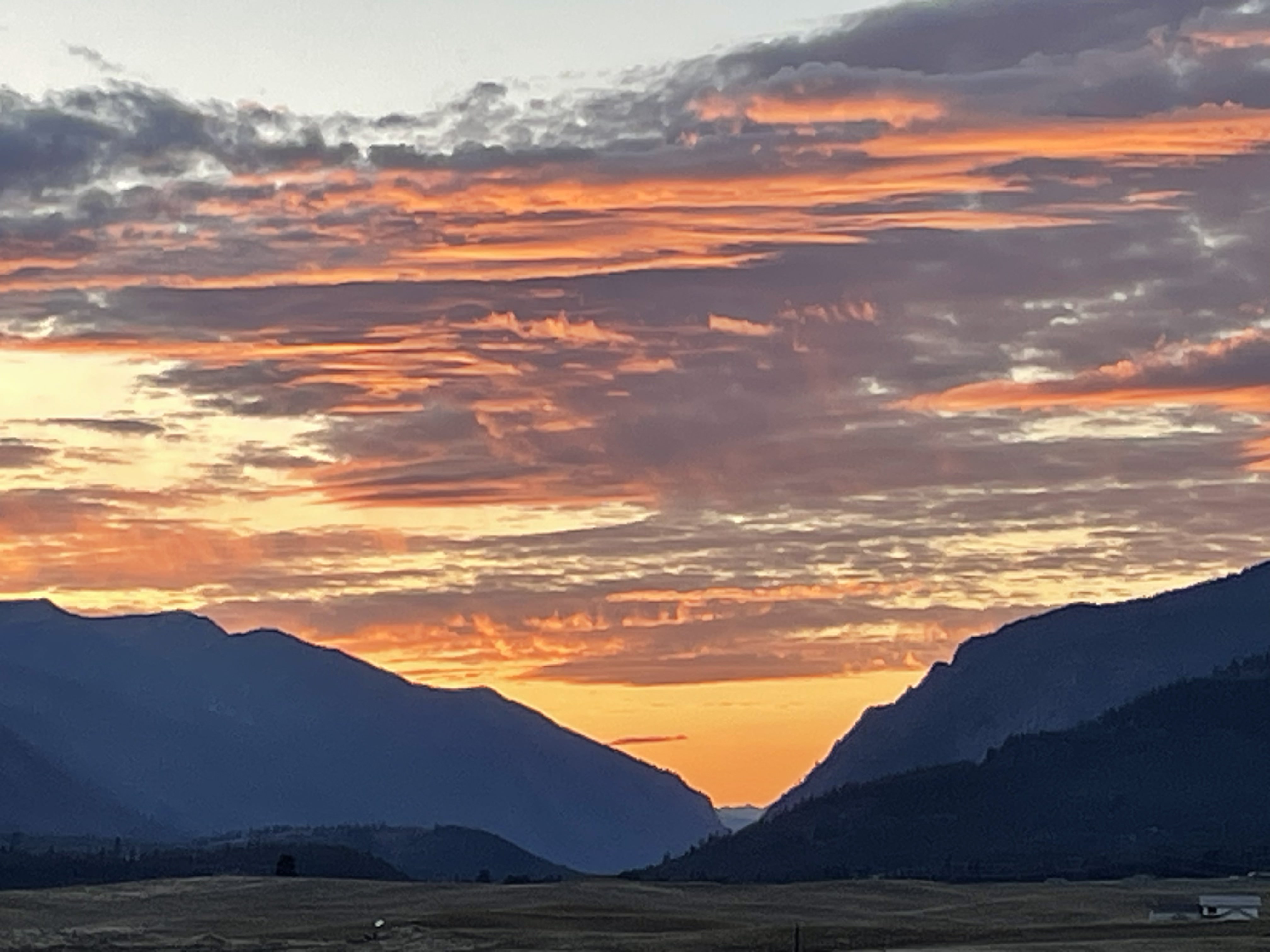
We see this kind of sunset from our west window most evenings. It's really tough living in Montana!
This website uses affiliate links which may earn a commission for purchases made at no additional cost to you.